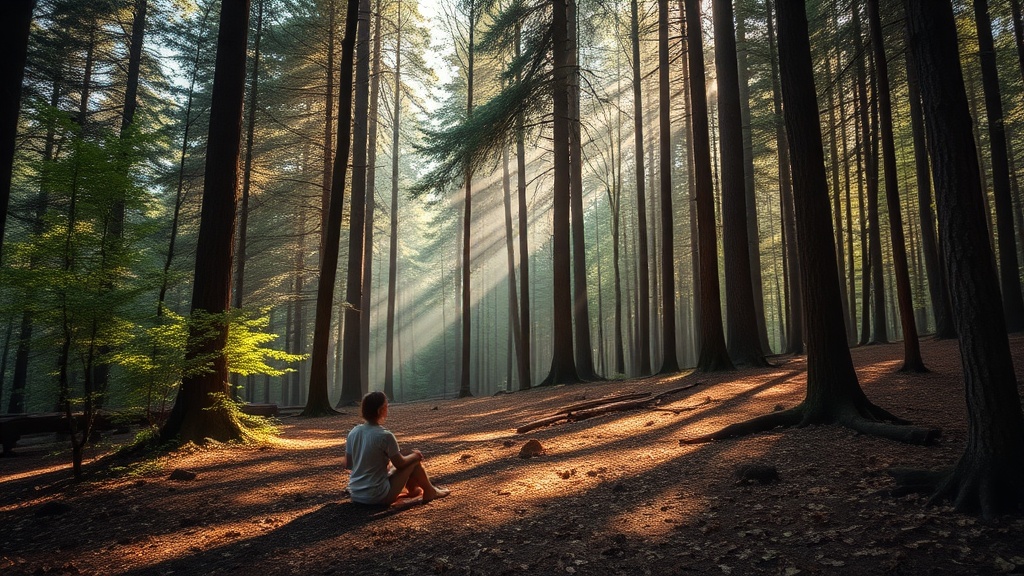
Nurturing Your Nervous System Through Forest Bathing and Grounding

The Power of Forest Bathing
Grounding Your Physical Energy
Finding Stillness in the Wild
Imagine you're sitting at your desk in downtown Burlington, the hum of the laptop fan competing with the dull ache in your shoulders and a constant, low-grade sense of urgency. You've had your caffeine, you've checked your emails, but your brain still feels like it's running a marathon. This state of constant high alert—often called sympathetic nervous system dominance—is a physiological reality for many of us living modern lives. This post looks at how two specific practices, Shinrin-yoku (forest bathing) and grounding, can physically signal your body to shift into a state of rest and repair. We'll look at the biological mechanisms behind these practices and how you can actually use them to lower cortisol and improve your daily baseline.
What is Shinrin-yoku and how does it work?
Shinrin-yoku, or forest bathing, is the practice of being in a forest environment and engaging all your senses to connect with nature. It isn't about hiking for distance or exercise; it's about stillness and presence. Research suggests that the phytoncides—organic compounds released by trees—can actually boost our natural killer cell activity and lower blood pressure. Shinrin-yoku is a physiological tool, not just a mental one.
When you step into a dense wooded area, your body responds to the change in air composition and sound. The high-frequency noise of a city is replaced by the low-frequency sounds of wind through leaves and bird calls. This shift helps move the nervous system away from the "fight or flight" response. It's a direct nudge toward the parasympathetic state. (If you can find a trail near Mount Philo, do it—the elevation change and air quality are much different than the street level.)
Practical Ways to Practice Forest Bathing
You don't need a degree in forestry to do this. You just need to be intentional. Here is a simple way to approach your next outing:
- Slow your pace. If you're walking, walk so slowly that it feels almost awkward.
- Engage the senses. What does the damp earth smell like? How does the texture of bark feel under your fingers?
- Listen deeply. Try to identify the furthest sound you can hear, then the closest.
- Sit still. Find a stump or a rock and stay there for at least ten minutes.
How does grounding affect the human body?
Grounding, or earthing, involves direct physical contact with the Earth's surface to facilitate the transfer of electrons. The Earth carries a subtle negative electrical charge, and when we make skin-to-ground contact, we are essentially "plugging in" to a natural regulator. While some skeptics remain, many practitioners find that this contact helps reduce inflammation and improves sleep quality.
Think about how much time we spend in rubber-soled shoes or on carpeted floors. We are effectively insulated from the planet's surface. This lack of contact can contribute to a buildup of static and a general sense of being "unplugged." If you've ever felt a sense of fatigue that sleep doesn't fix, it might be worth looking at your connection to the ground. Actually, if you're interested in how physical connection affects your biology, you might find my previous piece on why your feet crave connection to the earth helpful.
The goal isn't to spend hours outside, but to find small, consistent ways to reconnect. A few minutes of barefoot time on the grass can make a difference. It's a simple, free way to influence your biological rhythms.
Grounding Methods and Gear
You can practice grounding in several ways, ranging from zero-cost natural methods to more structured indoor options. Some people use specialized products like the Earthing.com grounding mats or sheets to maintain this connection while sleeping, but nature is the original source.
| Method | Setting | Effort Level | Best For |
|---|---|---|---|
| Barefoot Grass Walking | Outdoor/Park | Low | Daily routine & Vitamin D exposure |
| Sand Walking | Beach/Lakefront | Medium | Deep relaxation & sensory input |
| Grounding Mats | Indoor/Home | Very Low | Consistent nightly use |
| Gardening (Bare Hands) | Garden/Yard | Medium | Physical movement + Grounding |
Can forest bathing and grounding be used together?
Yes, combining these two practices creates a powerful synergy for nervous system regulation. When you walk barefoot through a forest, you are engaging in a multi-sensory grounding experience that hits both the psychological and physiological levels. You are breathing in phytoncides while simultaneously absorbing the Earth's electron flow. It's a total system reset.
The two practices work on different, yet complementary, pathways. Forest bathing addresses the sensory and respiratory inputs, while grounding addresses the electrical and inflammatory aspects of the body. Using them together is like hitting the "reset" button on a computer that's been running too many heavy programs for too long. It clears the cache. It stops the background processes from draining your battery.
I often suggest this to people who feel "wired but tired." That specific state where you're exhausted but your brain won't stop racing is often a sign of a dysregulated nervous system. A forest walk with barefoot intervals can be much more effective than a high-intensity workout when you're in this state. In fact, a heavy workout might actually spike your cortisol even further if your system is already overtaxed. If you find yourself reaching for caffeine to push through that fatigue, you might want to read about how coffee disrupts your energy.
The beauty of these methods is that they don't require a subscription or a gym membership. You don't need to buy a new set of weights or a high-tech wearable. You just need to step outside. Even if it's just a small patch of grass in a local park, the benefit is real. The more you do it, the more your body recognizes these cues as a signal to relax.
It's worth noting that consistency beats intensity every time. You don't need a week-long retreat in the mountains to see the benefits. Ten minutes of barefoot time in a local wooded area once a day will do more for your nervous system than one long hike once a month. It's about the regular, predictable signal you send to your brain that says, "We are safe. We are grounded. We can rest now."
If you're looking for a way to start, don't overthink it. Grab your boots, find a trail, and when you get to a clearing, take them off. Feel the temperature of the earth. Listen to the wind. That's where the real work happens.