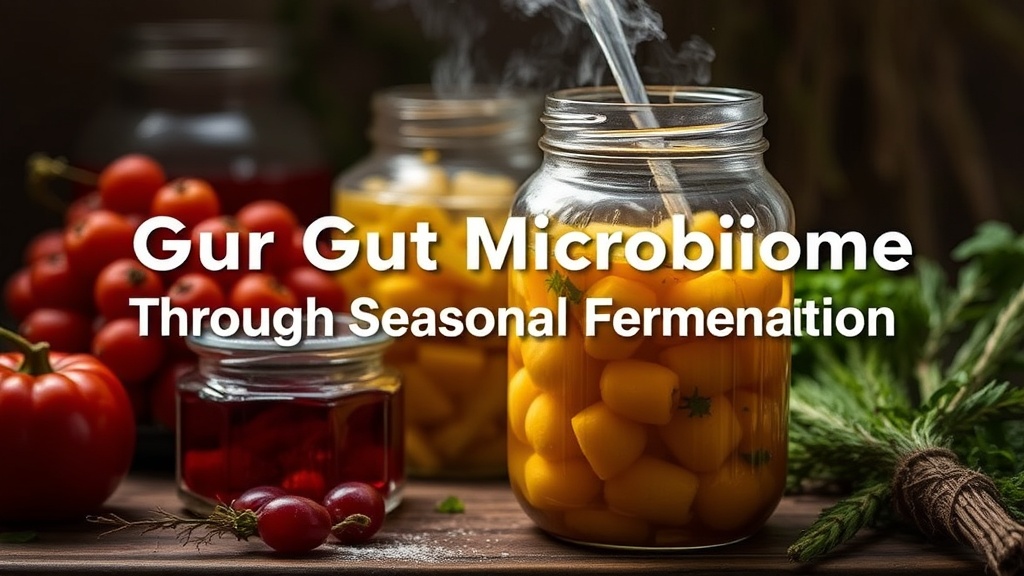
Nurturing Your Gut Microbiome Through Seasonal Fermentation

Imagine a kitchen counter cluttered with jars of bubbling cabbage, sliced cucumbers in brine, and mounds of colorful root vegetables. A small, steady hiss of air escapes a jar as a lid is slightly turned—a sign of life within the glass. This isn't just food preparation; it's a way to sync your internal biology with the rhythm of the earth. We're looking at how seasonal fermentation works to support your gut microbiome through different times of the year.
The gut-brain connection is real, and much of it relies on the trillions of bacteria living in your digestive tract. When we eat fermented foods, we aren't just consuming nutrients; we're introducing live, beneficial bacteria that help keep our systems running smoothly. Since the produce available to us changes with the seasons, our fermentation methods should change too.
Why Does Seasonal Fermentation Matter for Gut Health?
Seasonal fermentation matters because it allows you to consume the specific nutrients and probiotics available during a particular time of year, which helps your body adapt to changing environmental demands. In the spring, your body might need lighter, more bitter ferments to support detoxification. In the winter, you want heavier, more calorie-dense ferments to maintain energy and warmth.
The bacteria in your gut aren't static. They respond to the food you eat and the temperature of your environment. By rotating your fermented foods—moving from the light pickles of summer to the heavy, fermented sourdoughs of winter—you provide a diverse range of microbial inputs. This diversity is the secret to a resilient digestive system.
Think of it like a rotating menu for your microbes. If you only eat the same sauerkraut year-round, you might miss out on the unique benefits of seasonal vegetables. For example, the high-potassium root vegetables of autumn provide a different kind of fuel than the leafy greens of spring.
It's worth noting that much of our modern diet is stripped of these live cultures. Most grocery store "pickles" are actually made with vinegar, which kills the beneficial bacteria. To get the real stuff, you need to look for words like "raw," "unpasteurized," or "naturally fermented" on the label. Brands like Brine Ave often focus on these traditional, live-culture methods.
What Are the Best Fermented Foods for Each Season?
The best fermented foods for each season are determined by the availability of local, fresh produce and the physiological needs of your body at that time. You want to match the "energy" of the food to the season's temperature and your body's requirements.
| Season | Focus Nutrients | Best Fermented Foods | Primary Benefit |
|---|---|---|---|
| Spring | Bitters & Greens | Fermented radish, sprouts, light kimchi | Detoxification & Renewal |
| Summer | Hydration & Lightness | Cucumber brine, fermented fruit, kefir | Digestive Ease & Cooling |
| Autumn | Root Vegetables | Sauerkraut, fermented carrots, miso | Preparation for Cold |
| Winter | Dense Starches & Warmth | Sourdough, fermented bean pastes, heavy pickles | Sustained Energy & Immunity |
Spring: The Season of Renewal
Spring is about movement. After a long winter, your digestive system might feel sluggish. This is the time for bitter, light ferments. Think about fermented radishes or even a light, tangy spring onion ferment. These help stimulate bile production and get things moving again. It's a bit like a spring cleaning for your insides.
Summer: Cooling and Hydrating
When the heat rises, your body wants to avoid heavy, inflammatory foods. You'll want to focus on high-moisture ferments. A cucumber in a salt brine is a classic for a reason. You can also experiment with fermented fruit—perhaps a lightly fermented berry juice—to keep things refreshing. The goal here is hydration and ease. You don't want a heavy ferment sitting in your stomach while you're trying to enjoy a warm evening.
Autumn: Building Resilience
As the weather cools, we transition to more substantial foods. This is the time for the "heavy hitters" like traditional sauerkraut. The earthier flavors of root vegetables—carrots, beets, and parsnips—are perfect for fermentation during this time. These foods provide the complex carbohydrates and minerals needed to prepare your body for the upcoming cold months. It's a way to build a buffer against seasonal changes.
Winter: Sustenance and Warmth
Winter is the season of deep, slow fermentation. This is when you're leaning on sourdough breads and fermented bean pastes. These foods are incredibly dense in nutrients and provide a sense of warmth and stability. If you're making your own bread, using a long-fermented starter can actually make the grains easier to digest, which is a big help when your metabolism might slow down during the colder months. For more on supporting your body's internal environment, you might find interest in cellular hydration principles.
How Do I Start Fermenting at Home?
Starting fermentation at home is simple and requires very few tools, but you must prioritize cleanliness and precision to ensure you're growing good bacteria rather than bad. You don't need a laboratory; you just need a basic understanding of salt-to-vegetable ratios.
- Get your tools: You'll need glass jars (Mason jars are a classic), a scale for measuring salt, and weights to keep vegetables submerged.
- The Salt Factor: Salt is your preservative. It inhibits the growth of spoity bacteria while allowing the *Lactobacillus* to thrive. Usually, a 2% brine solution is the gold standard.
- Submerge or perish: This is the most important rule. The vegetables must stay completely below the liquid line. If they touch the air, they can develop mold.
- Watch the bubbles: Bubbles are a good sign! They mean the bacteria are active and producing lactic acid.
If you're feeling intimidated, start small. A simple jar of salted cucumbers or a small batch of sauerkraut is much less daunting than trying to make a complex kimchi. You'll learn the "feel" of the fermentation process through practice. One day it's a bit too salty, the next it's a bit too soft—that's part of the learning curve (and totally normal).
Don't be afraid of the smell. A healthy ferment should smell sour and tangy, like a pickle or a sourdough starter. If it smells "off," putrid, or like something has decayed, throw it out. There's a fine line between "tangy" and "rotten," and it's your nose that will tell you the difference. If in doubt, toss it.
For those who want to dive deeper into the science of how microbes behave, the Lactobacillus documentation on Wikipedia offers a deep dive into the specific bacteria that drive these processes. Understanding the "why" can make the "how" much more intuitive.
One thing to keep in mind: your body's needs change. If you find yourself feeling bloated after a certain fermented food, it might not be the food itself, but rather the timing. Perhaps your body isn't ready for a heavy ferment in the middle of a heatwave. Listen to your gut—literally.
The beauty of this practice is that it's a skill that evolves with you. As you become more comfortable with the textures and the smells, you'll start to see the kitchen as a living, breathing space. It's not just about cooking; it's about participating in a natural cycle that has existed for thousands of years.